

Write to us
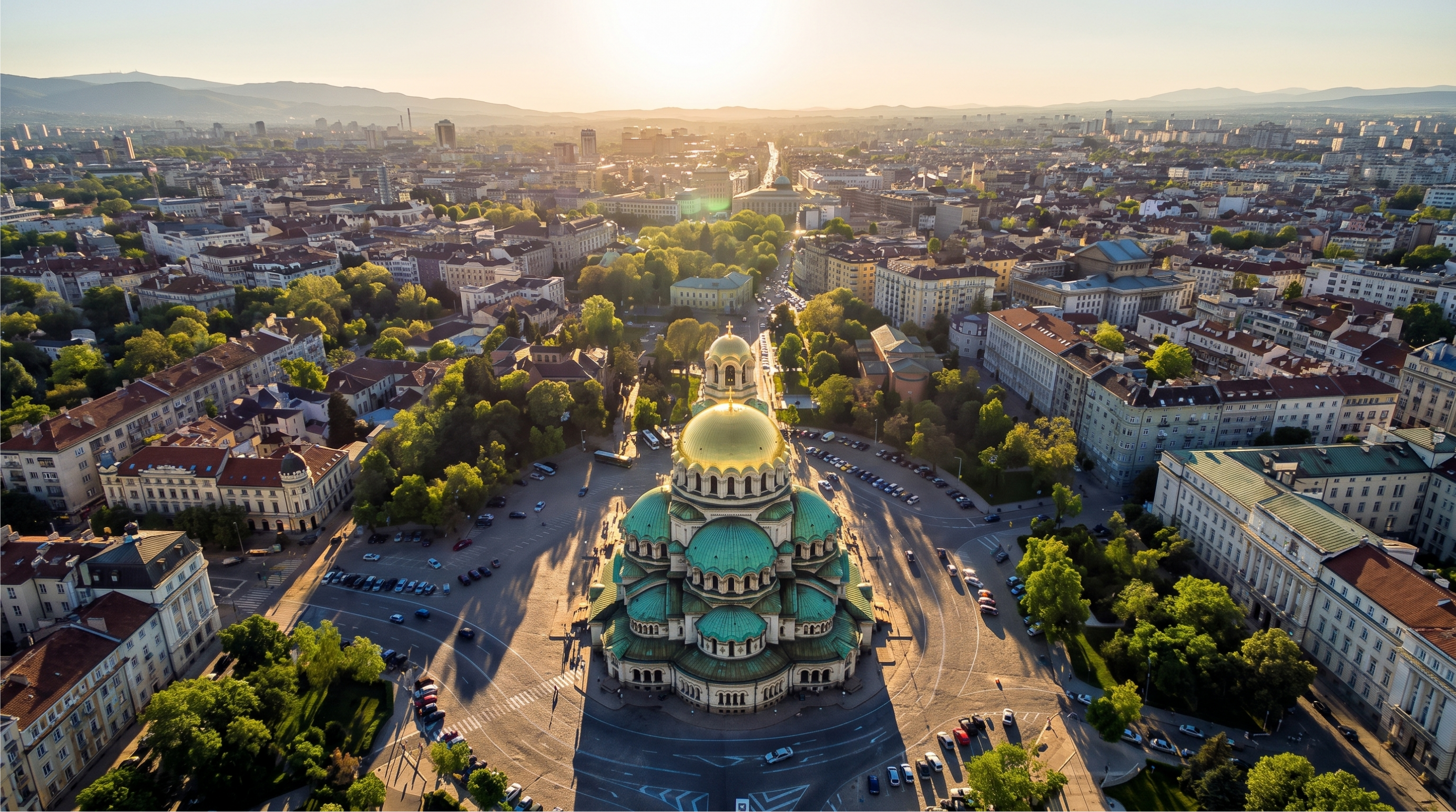

Bulgaria is a country with thousands of years of history and a cultural heritage that embraces ancient civilizations. Visitors will find much to interest them in the country’s history, culture, ethnography, religion, architecture and the arts. Unique archaeological sites abound throughout the country – ancient settlement mounds from the Neolithic age, Thracian sanctuaries and tombs, remains of Roman cities, Byzantine and Medieval fortresses, architectural reserves, ethnographic complexes, churches and monasteries, Tekkes (mosques), among many others.
Despite the fact that it occupies only 2% of Europe’s territory, about 40,000 historical monuments have been registered in Bulgaria (7 of which are included in the UNESCO list of world cultural heritage sites), 36 cultural reserves, 160 monasteries, and roughly 330 museums and galleries. This includes prehistoric finds, Thracian tombs, sites from the Greek Age, Roman fortresses, historical monuments from the time of the First and the Second Bulgarian Kingdoms, and architectural landmarks from the Age of Revival.
Emblematic for Bulgaria are the monuments included in the UNESCO List: the Kazanlak Tomb (4th – 3rd century BC), the Thracian Tomb by the village of Sveshtari near Razgrad (3rd century BC), the Madara Horseman (8th century), the Boyana Church (10th – 11th century), the Ivanovo Rock Churches near Ruse (10th – 14th century), the Rila Monastery (10th century), the Old Town in Nesebar.
Emblematic for Bulgaria are the monuments included in the UNESCO List: the Kazanlak Tomb (4th – 3rd century BC), the Thracian Tomb by the village of Sveshtari near Razgrad (3rd century BC), the Madara Horseman (8th century), the Boyana Church (10th – 11th century), the Ivanovo Rock Churches near Ruse (10th – 14th century), the Rila Monastery (10th century), the Old Town in Nesebar.
There are more than 200 museums in the country – the unique Museum of Yogurt in the village of Studen Izvor (Tran region), the Museum of Roses in Kazanlak, the Museum of Transport in Ruse, the Museum of Fretwork in Tryavna, the Museum of Humor in Gabrovo, the Museum of Medical History in Varna, the Museum of Mosaics in Devnya, the Museum of Salt in the town of Pomorie, the Polytechnic Museum in Sofia City, the National Museum of Anthropology in Sofia, the Museum of Aviation in Plovdiv, the Museum of Wine in Pleven, the National History Museum, the museum “Earth and its People,” and many others.
The country’s calendar abounds in cultural events. Some of these are the Sofia Film Fest, the festival “Varna Summer”, the “Music Days in March” in Ruse, the “Sofia Music Weeks”, “Apolonia” and many others.
Что посетить
